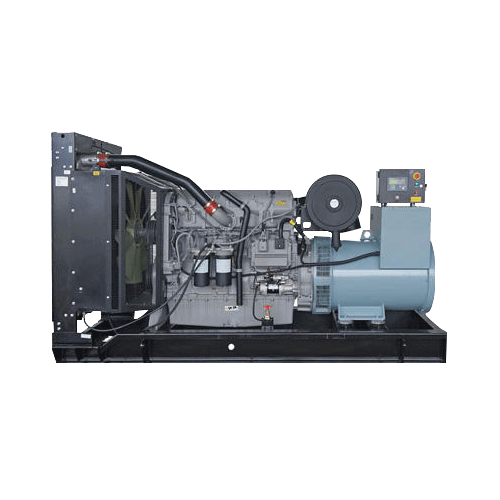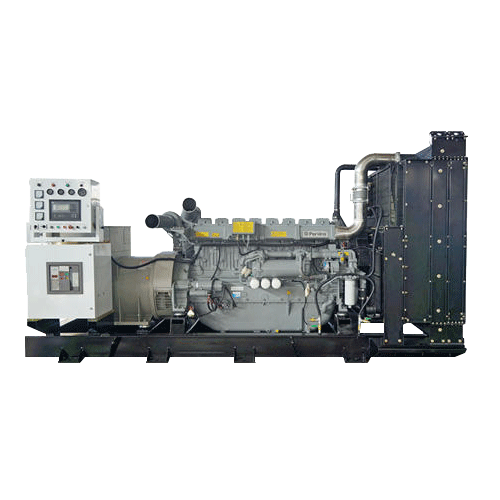
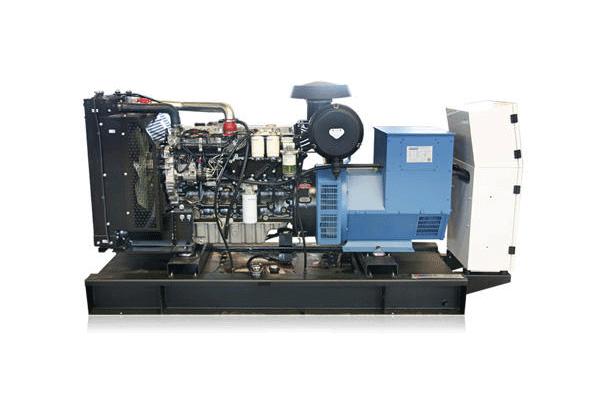
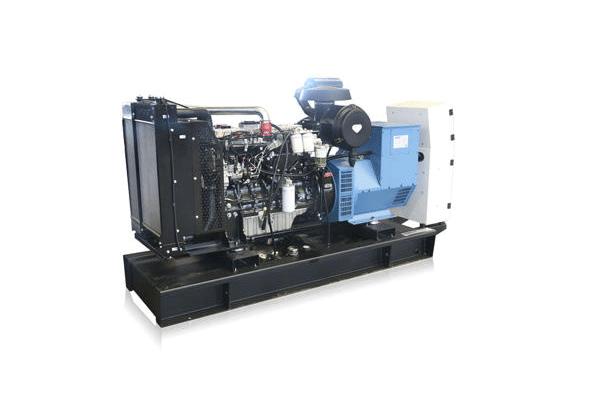
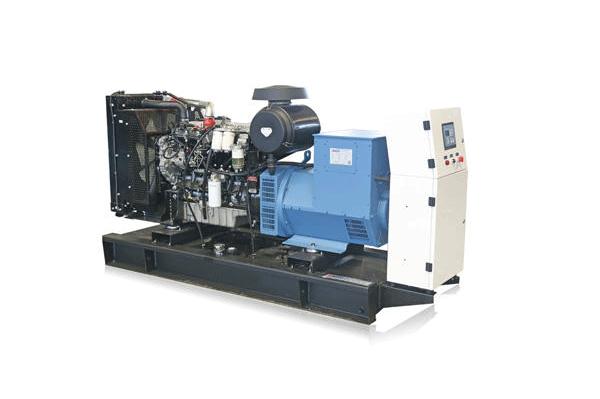
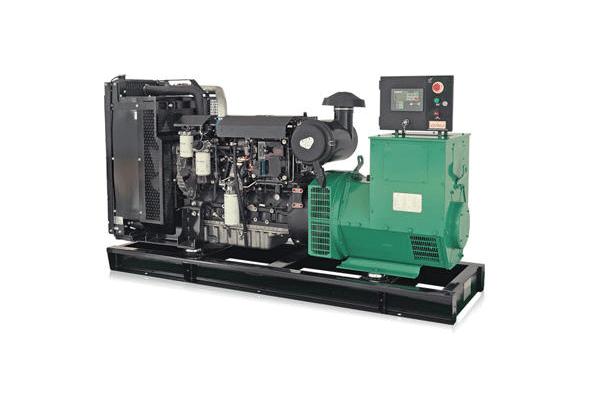
PRP: 150 kW / 187.5 kVA
Standby: 165 kW / 206.25 kVA
Engine: 1106A-70TAG4
PRP: 150 kW / 187.5 kVA
Standby: 165 kW / 206.25 kVA
Engine: 1106A-70TAG4
150 kW Prime / 165 kW Standby | Perkins 1106A‑70TAG4 | 400/230V 50Hz
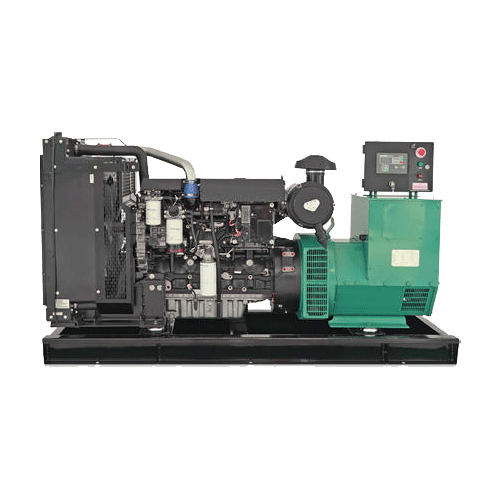
The JT‑150KW runs the Perkins 1106A‑70TAG4 — a 6‑cylinder 7.01L inline turbocharged diesel engine rated at 150kW prime power with 165kW standby. At 2.8t and 3,400mm length, it is the entry point of JUTOP's Perkins range and targets construction site prime power, small workshop baseload, village‑level telecom stations and regional hospital backup across Sub‑Saharan Africa, South Asia and Southeast Asia. The 7.01L displacement sits in the most common Perkins power band globally — meaning the 1106 series has the deepest parts distribution network of any Perkins engine family, and local mechanics in remote regions are more likely to have serviced one than any other diesel format.

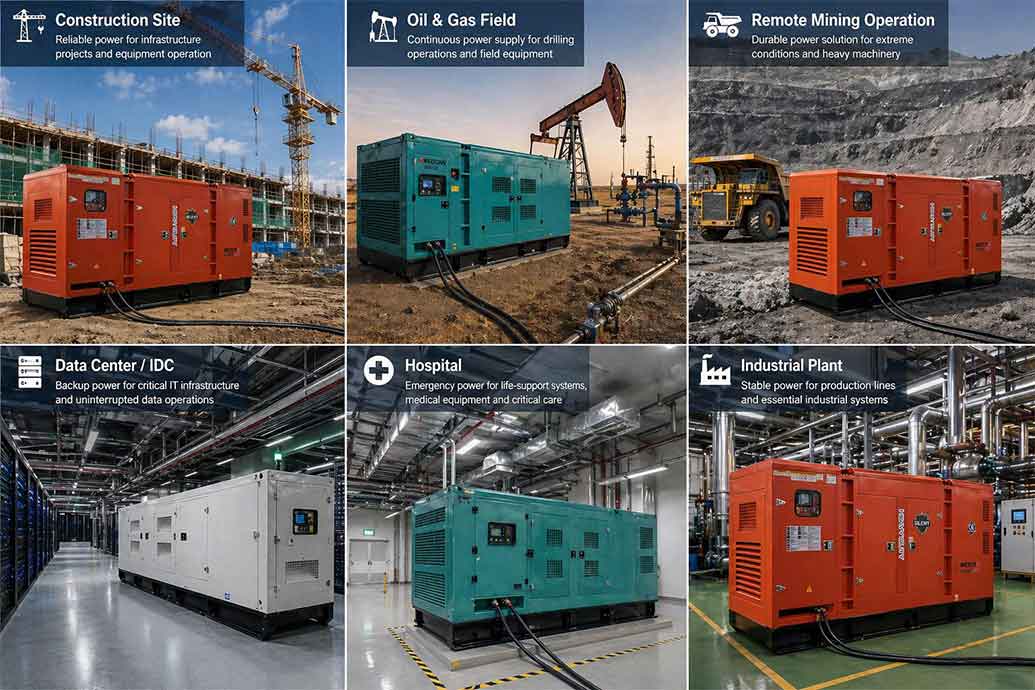
· Medium‑Sized Factory Continuous Power
· Construction Site Standby Power
· Regional Hospital Emergency Backup Power
· Telecom Base Station Continuous Supply
· Commercial Building Standby Power
· Mining Auxiliary Site Power
· Remote Facility Emergency Supply
| Model | JT‑150KW |
| Prime Power | 150 kW / 187.5 kVA |
| Standby Power | 165 kW / 206.25 kVA |
| Voltage / Frequency | 400/230V · 50Hz |
| Rated Current | 270 A |
| Engine Model | Perkins 1106A‑70TAG4, 6‑Cyl In‑Line Turbocharged |
| Displacement | 7.01 L |
| Bore × Stroke | 105 × 135 mm |
| Compression Ratio | 16.0:1 |
| Cycle Type | 4‑Cycle Diesel |
| Engine Rated Speed | 1500 RPM |
| Peak Torque @ 1500RPM | 820 N·m |
| Cooling System | Water‑Cooled |
| Engine Oil Capacity | 18.5 L |
| Start Motor Voltage | 24V DC |
| Alternator Type | Brushless, Self‑exciting, H‑Class Insulation, 3‑Phase |
| Phase & Connection | 3‑Phase 4‑Wire |
| Power Factor | 0.8 lagging |
| Insulation Class | Class H |
| Protection Grade | IP21 |
| Total Harmonic Distortion (THD) | <5% |
| Fuel @ 50% Load | 180‑188 g/kW·h (Perkins 1106A‑70TAG4 datasheet) |
| Fuel @ 75% Load | 196‑204 g/kW·h (Perkins 1106A‑70TAG4 datasheet) |
| Fuel @ 100% Load | 212‑220 g/kW·h (Perkins 1106A‑70TAG4 datasheet) |
| Fuel Tank Capacity | 320 L / ≈10‑hr @ 75% Load |
| Scheduled Maintenance Interval | 500 Working Hours |
| Noise Level | 70‑72 dB(A) @ 1 Meter |
| Max Operating Altitude | ≤1,000 m |
| Max Parallel Units | Up to 8 Units (IEC 8528‑5) |
| ATS Compatibility | Yes |
| Transport Dimensions | 3,400 × 1,500 × 1,700 mm |
| Overall Weight | 2.8 t |
| Certifications | ISO9001 · CE · SONCAP · PVoC · NRCS · SIRIM · SNI · TISI |
| Production Lead Time | 30‑35 Working Days |
| Shipping Lead Time | 40‑50 Days Ocean Freight |
| Payment Term | 30% Advance, 70% Before Shipment |
The Perkins 1106A‑70TAG4 is part of the 1100 series — the most widely distributed Perkins engine family in Sub‑Saharan Africa, South Asia and Southeast Asia. It powers agricultural tractors, construction equipment and industrial machinery across these regions. This means local Perkins distributors and independent mechanics are familiar with the 1106 series fuel injection timing, cylinder head procedures and turbocharger replacement. When a 150kW generator goes down in a remote region, getting it running again depends less on specialized knowledge than on whether the local parts supplier has the right filter or injector in stock. The 1106 series is where that stock is deepest.
At 70‑72 dB(A) at 1 meter, the JT‑150KW produces noise levels comparable to a heavy diesel truck idling at close range — noticeable but not disruptive in an industrial setting. At this power class, many competing units run at 74‑76 dB(A). The practical implication: for regional hospitals where generators run adjacent to patient wards, construction sites near residential areas, or telecom base stations in populated zones, 2‑4 dB lower at source can mean the difference between a standard acoustic canopy and a specialized low‑noise enclosure costing $8,000‑15,000 extra. At 10 meters, 72 dB(A) drops to approximately 52 dB(A) — acceptable for most residential‑adjacent planning requirements with basic attenuation.
The JT‑150KW comes pre‑configured for ATS (Automatic Transfer Switch) integration. For hospital backup systems, telecom base stations and commercial building standby setups, this means the generator starts and transfers load automatically when grid power fails — no manual startup required. At 150kW, the ATS panel cost is manageable within the overall project budget, and the automatic transfer eliminates the risk of overnight or weekend power failures going unnoticed for hours. For facilities with staff present during the day but unoccupied at night and on weekends, ATS capability is not an optional extra — it is the difference between backup power that works and backup power that fails the moment you need it.
At 2.8t and 3,400mm length, the JT‑150KW fits a 20‑foot container with room to spare and a standard flatbed truck without oversize permits in most jurisdictions. This matters for construction sites: the generator can be moved between project phases on a standard low‑loader rather than requiring a heavy‑haulage truck. For telecom operators rolling out village‑level base stations across a region, this footprint means standard logistics rather than specialized transport procurement. The 2.8t weight also means it can be installed on standard concrete plinths rather than requiring structural engineering for reinforced foundations.
The TAG4 burns 212‑220 g/kW·h at 100% load versus the TAG3 at 218‑226 g/kW·h — a 6‑8 g/kW·h improvement per Perkins 1106A‑70TAG4 datasheet. At 75% load, the gap is 196‑204 vs approximately 202‑210 g/kW·h. For a construction site running 2,000 hours per year, the TAG4 saves roughly 3,600‑5,400 liters of diesel annually compared to the TAG3 at equivalent load — approximately $3,200‑6,500 per year at regional fuel prices. The payback on the TAG4 price premium is within the first full year of operation at typical construction site utilization rates.
Perkins specifies 500 working hours between scheduled services for the 1106A‑70TAG4. Construction sites typically run 8‑10 hours per day, 5‑6 days per week — approximately 2,000‑2,500 hours per year. This means two service events per year, both schedulable during planned site shutdowns or between project phases. For small workshops and agricultural processors running seasonal schedules, the 500‑hour interval can align with annual off‑season maintenance windows, keeping the generator ready for the next peak‑demand period without requiring mid‑season downtime for servicing.
· Factory‑direct pricing — no intermediaries. Full technical datasheets and configuration tailored to your site conditions.
· Delivery: 30–35 business days · Payment: 30% advance, 70% on completion
· Certifications: ISO 9001 · CE · NOM · RETIE · INMETRO · ANCAP

Shandong Jutop Heavy Industry Technology Co., Ltd. is a national high-tech heavy machinery manufacturer founded in 2013. Equipped with a 50,000㎡ workshop and over 300 professionals, we specialize in R&D and export of construction machinery, drilling rigs and generators. Boasting 200+ patents and global certifications, our products are exported to over 120 countries, dedicated to supplying reliable cost-effective equipment for worldwide clients.

Submit your questions via the form below for a response within 1 business day.